WHO's who, measles & storms
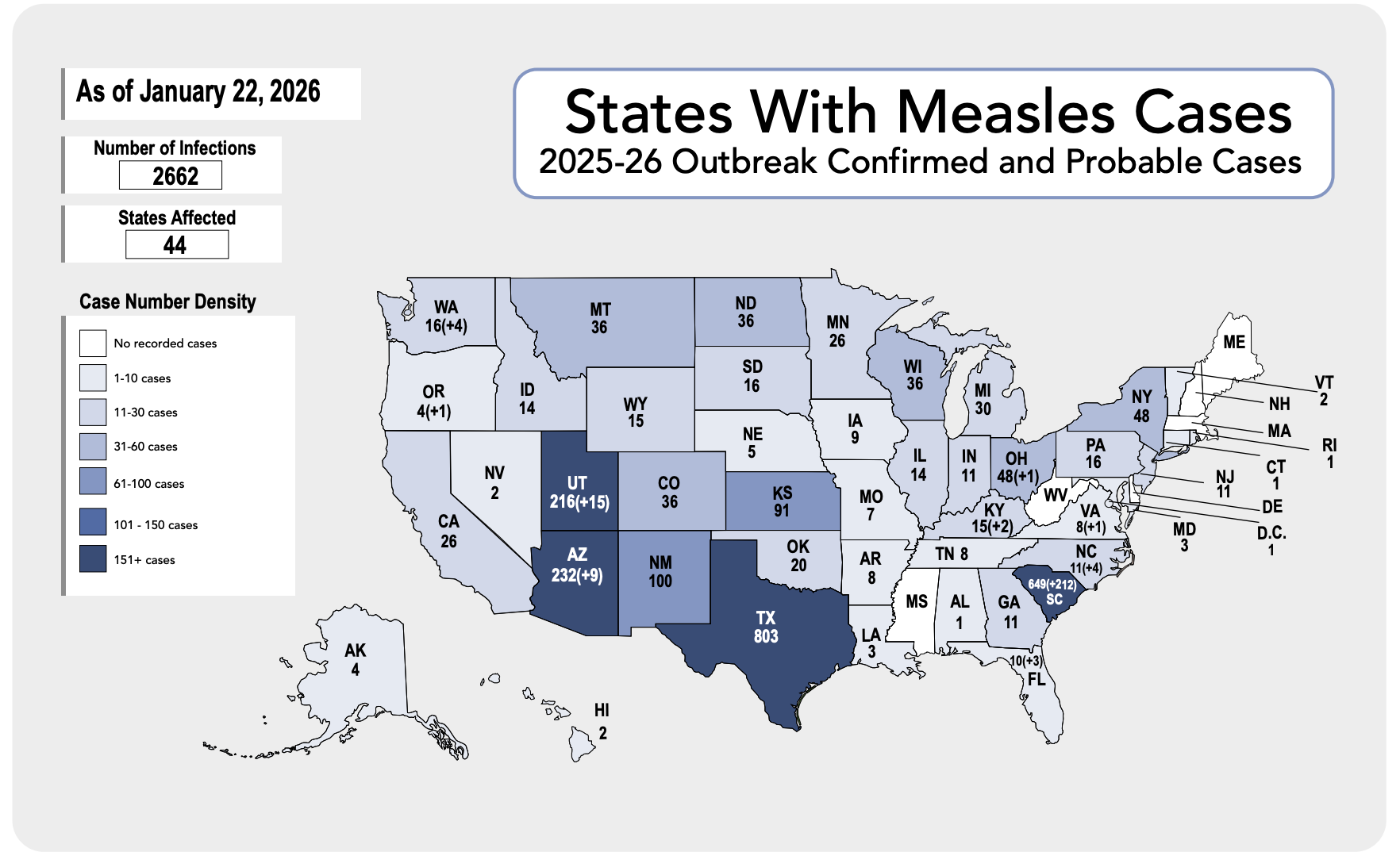
Lots to keep up with this week, from the U.S. withdrawing from the WHO, a major winter storm threatening power outages and business closures, and measles in SC growing at an unprecedented pace.
Measles News:
- South Carolina’s measles outbreak expanded by over 200 cases again this week, to a total of 646 cases. It’s now growing more quickly than the West Texas outbreak last year. (Brown Pandemic Center)
- The principal deputy CDC director said that losing measles elimination status was the “cost of doing business,” and he wouldn’t see it as a significant event. (STAT)
- Napa County, CA reported its first measles case since 2012. (SF Chronicle)
Health News:
- A major winter storm across the eastern two-thirds of the U.S. is threatening power and heat. Millions of businesses and schools are planning to close. (AP)
- One person is dead and at least 35 others sickened by a rare fungal infection in Tennessee, caused by breathing in spores found in soil. (NY Times)
- The U.S. officially withdrew from the WHO yesterday, with $278 million of unpaid bills and a lot of unanswered questions. (Time, STAT)
- Flu vaccination rates are dropping for older adults as cases rise. (Bloomberg)
- Washing your produce, even at home, can protect your gut. (Baltimore Sun)
- Ixchiq, a chikungunya vaccine, was pulled completely from the U.S. market after an adverse event abroad. It’s been suspended since summer. (MedPage Today)
- The Red Cross announced a severe blood shortage and has asked Americans to donate. (ABC)
- Prenatal exposure to wildfire smoke may be linked to higher autism risk, a new study found. (NBC)
- Yet another study shows just how amazing the shingles vaccine seems to be for preventing dementia, especially for women. (Ground Truths)
- Dozens of Minneapolis-area restaurants and other retail organizations will be closed tomorrow in protest of ICE raids. (Fox)
- The high cost of child care is making some parents rethink having kids. (19th)
Best Question:
Are we seeing health departments’ response to measles change over time?
We’re seeing two main responses to measles from health departments: general disinterest or large-scale quarantine for non-vaccinated people, usually kids.
Around the U.S., most measles cases we have seen that affect our clients’ businesses are one-offs. They’re international travelers who just returned home, or people who are part of small outbreak pockets. They’re either our clients’ employees or guests who have visited their businesses while infectious. For most of these, we’re seeing health departments go public quickly, but only with a list of places the sick person was during their infectious period. It often includes multiple businesses they’ve shopped at, community organizations like churches or synagogues they’ve visited, and healthcare facilities where they sought medical attention. In most of these, the health department isn’t requiring vaccination or quarantine for exposed employees, even if they worked with the sick person.
The situations we’re seeing them react more strongly to are school exposures - when a child or staff member went to school sick, and there are dozens or even hundreds of unvaccinated children who were exposed. In these cases, we are seeing health departments require quarantine for those who aren’t vaccinated, in part because children are extra vulnerable to measles. It’s a good thing, too – in South Carolina last month hundreds of kids had to stay home from school for 21 days after exposure, and dozens of them later developed measles symptoms. The quarantines there and at the Utah-Arizona border keep coming, especially for unvaccinated school children.
It’s important to keep in mind that we’re seeing really varied responses across the board from health departments. Some are really active and see themselves as key players in the absence of federal leadership (due to cuts and the government shutdown), while others are understaffed and overworked, just trying to stay afloat with the bare minimum. If you have measles in the area, you should be prepared for either end of the spectrum.
Best Read:
As of yesterday, the U.S. left the WHO. This article from TIME Magazine breaks down whether it’s actually possible (it’s never been done before), what it means, and what will change here in the U.S. and around the world as a result.
The U.S. Has Pulled Out of the WHO. Here’s What That Means for Public Health - TIME