We might be fueling the next outbreak 🦠
Why does it feel like there’s always another outbreak? New research has some answers. Plus, bird flu reaches polar bears, frozen clams are linked to Hep A, and fall allergies complicate sick calls.
Health News:
- Bird flu is picking back up, with eight new poultry outbreaks reported by the USDA, mostly in Minnesota, and a new study finding the virus in Alaska polar bears. (USDA)
- A Hep A outbreak linked to frozen clams has sickened 37 people in four states, with 30 hospitalized. (CDC)
- Kratom, an herbal supplement with opioid-like effects, was found while authorities investigated the deaths of two Ole Miss students. (AP News)
- At-home vaccinations for Amish families in parts of rural PA are one of the tools being used to slow down the growing statewide measles outbreak. (BBC)
- Fall COVID vaccines for kids were released this week, after a nearly one-month delay. (CIDRAP)
- Doctors in Pennsylvania have a steep learning curve about congenital measles after at least six babies were born already infected. (KFF Health News)
- There were not one, but two, measles exposures in the Philadelphia airport. (FOX)
- Three counties in Florida have declared a state of emergency as mosquito-borne dengue fever cases rise. (WUSF)
- Legionnaires is in the news again with a Hilton Inn in Evanston, IL, experiencing an outbreak, likely from its hot tub. (ABC)
- More than 30 emergency workers got norovirus while participating in a crisis drill in upstate New York. (Hudson News)
Best Question:
Are fall allergies a real thing, or are my employees yanking my chain?
I’m sorry to report that fall allergies are all too real – and quite common. Certain allergens are more prevalent in the fall, when people are still spending time outdoors and exposed to different molds and pollen than other seasons.
But it’s also the start of respiratory virus season, so telling the difference can be tricky. Our best hint: itchy, watery eyes are unique to allergies, so if someone has those, it’s generally allergy-related. If an employee normally has allergy symptoms, and there’s nothing new or different about their symptoms this year, it’s safe to assume they’re seasonal allergies and they can continue to work.
Here’s our handy chart to help you quickly assess which symptoms are common:
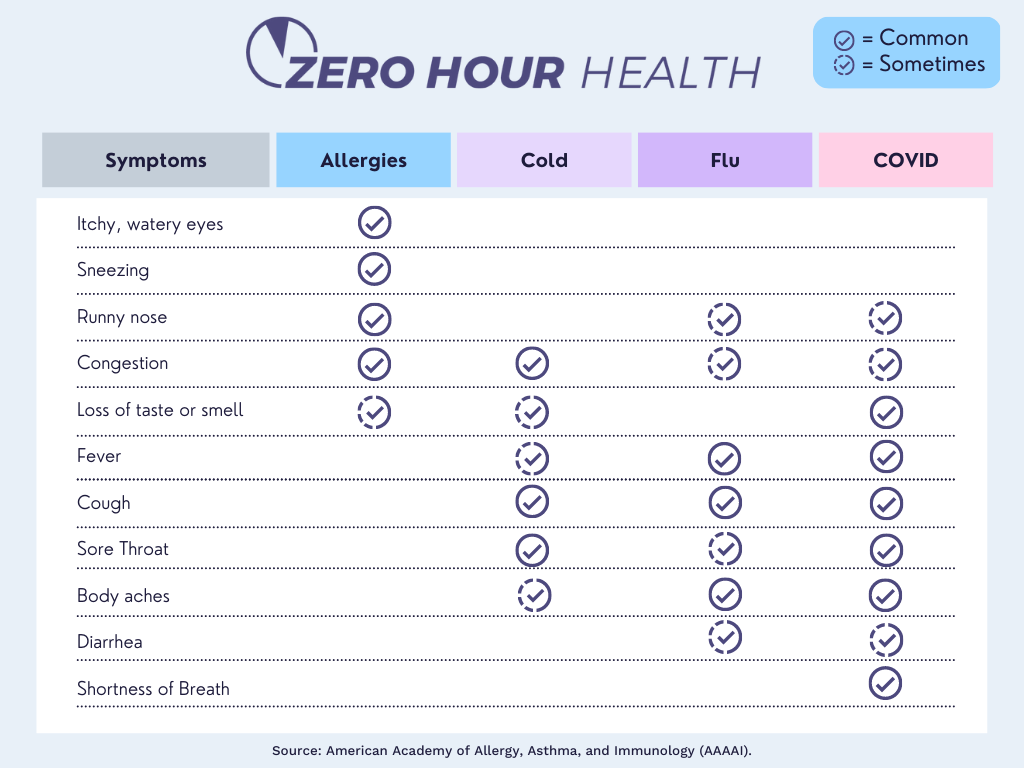
Sources: Washington Post, AAAAI
Best Listen:
It isn’t your imagination (or just that you read this briefing)... we really are seeing more outbreaks. The reasons why are complicated and interconnected, and humans may be playing a bigger role than we realize. Our friends at NPR dig into what’s driving the increase and what we can actually do about it.
New research suggests human actions could be driving increase in disease outbreaks : NPR