Mumps in MD, cocaine in Nantucket water 😰
Plus, can you get measles if you're vaccinated?
Measles & Mumps News:
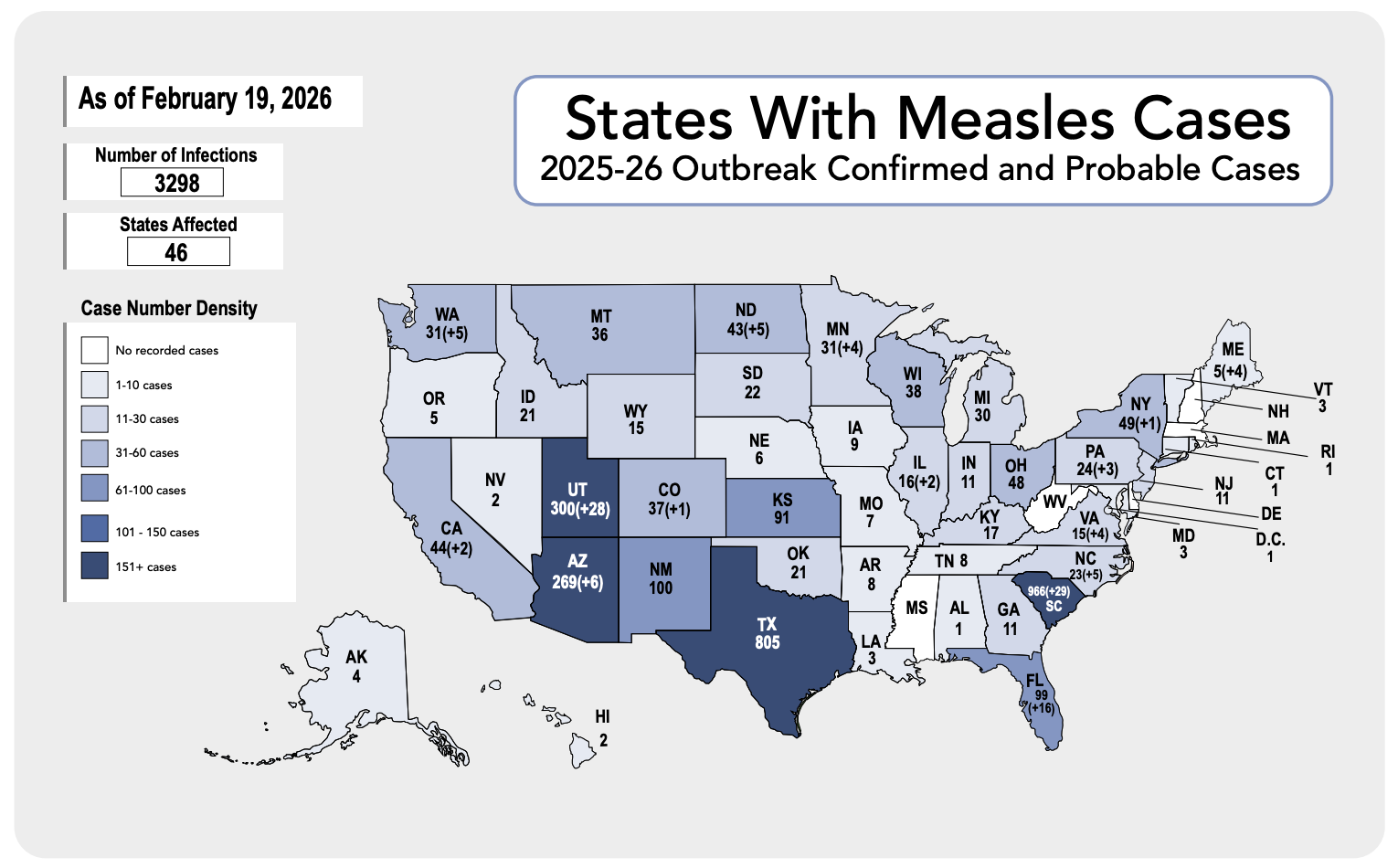
- South Carolina’s measles total has risen to 962, up about 30 from last week, which (believe it or not) is actually slowing down. (CIDRAP)
- Utah’s outbreak has reached 300 cases (an infectious student in Salt Lake City attended school for a full week there) and North Carolina has had 22 cases since late December. (KSL, CIDRAP)
- Maryland has reported 14 cases of mumps so far in 2026, compared to just four cases in all of last year. (Bay Net)
Health News:
- Flu B is rising fast in the U.S., with test positivity and outpatient visits for flu-like symptoms rising again, though hospitalizations are declining. (Brown Pandemic Center)
- After withdrawing from the WHO, HHS officials have proposed a more expensive ($2B) replacement to duplicate it. (Washington Post)
- Over 1,100 geese died in New Jersey this week of a suspected bird flu outbreak. (NBC)
- More raw oysters from British Columbia, Canada were recalled due to potential norovirus contamination. (FDA)
- The outbreak of Salmonella linked to Moringa powder is an extensively drug-resistant strain, and was distributed around the world. (FDA)
- Northern Nevada has an outbreak of pertussis (whooping cough), with 13 cases so far this year, which is more than 2023 and 2024 combined. (Washoecounty.gov)
- An experimental E. coli vaccine is showing promise in phase 2 trials. (CIDRAP)
- Dr. Oz, head of Medicare and Medicaid, has vowed that vaccines will continue to be fully covered, and urged people to get the MMR vaccine this week. (Bloomberg)
- The painful tropical disease chikungunya can now be transmitted by mosquitoes in most of Europe, thanks to higher temperatures. (The Guardian)
- Jay Bhattacharya, head of the NIH, has been named acting CDC director. (Politico)
- The FDA reversed course and agreed to review Moderna’s new mRNA flu vaccine. (STAT)
- Nantucket’s wastewater testing has turned up one consistent outlier: cocaine. (Inquirer and Mirror)
Best Question:
Can you get measles if you’re vaccinated?
Yes, you can get measles if you’re fully vaccinated, though it’s much more rare. There’s a lot of confusion when it comes to vaccines that don’t offer perfect protection – does this mean the vaccine doesn’t work? Why bother getting it if you can get measles even if you have two doses?
Here’s what to know:
The vast majority of measles cases are in people who aren’t fully vaccinated. Of the 2,278 measles cases in the U.S. last year, the vast majority (93%) were in people who were totally unvaccinated, plus another 3% were those who had just one dose of the MMR vaccine, meaning they weren’t fully vaccinated. That leaves about 4% of cases who got the measles last year in the U.S. even though they had the recommended 2 doses of the MMR vaccine.
Only 3-4% of people who get measles are fully vaccinated. About 3% on average just don’t produce antibodies to the measles virus after vaccination, and therefore don’t get the protection against the disease if they encounter it later. If that sounds high to you, consider comparing it to flu, where vaccination protects against severe illness and death but doesn’t necessarily stop you from getting sick. In reality, the measles vaccine is one of the best. It completely prevents infection in 96-97% of people who are fully vaccinated, which actually makes it one of the most effective vaccines ever.
If you’re fully vaccinated, you’re much less likely to have severe illness (or to pass the measles on to others!). While you’ll still need to isolate if you are in the unlucky 3 or 4% who don’t get immunity from the MMR vaccine, you’re in luck. As far as we know, there’s never been a recorded death from measles in someone with 2 doses of MMR vaccine. The only person with a vaccine who has died in the U.S. since 2001 from measles was someone who was immunocompromised and only had one dose of the vaccine.
So, is it still worth it to get vaccinated even if you can be one of the unlucky few that don’t develop immunity after vaccination? Definitely. It slashes your chances of even getting the virus by a whopping 97% on average, and offers protection against death even if you do. Sounds like a good bet to us.
Sources: Slate, Yale School of Public Health, Today
Best Read:
So much of what we do here at ZHH is communicating complex, evolving scientific understanding into clear, actionable guidance for employers. But it’s always a trade-off between clarity and nuance. This thoughtful article from Kristen Panthagani covers a study that’s specifically on foodborne illness messaging - super relevant!
What happens when public health says “we don't know?" - You Can Know Things - Kristen Panthagani, MD, PhD