Measles + Wildfire Weather in TX 🧯
Plus, H7N9 in Mississippi birds, an FDA "Whip-its" warning, and noro still rampaging
Bird Flu News:
- Aging might not be enough to eliminate H5N1 virus in raw milk cheese. (CIDRAP)
- H7N9 bird flu, not seen in the U.S. since 2017, was found in a commercial poultry flock in Mississippi. (CIDRAP)
- The UN Food and Agriculture Organization, warning of ‘unprecedented’ spread of avian flu, put out a call for stronger biosecurity, surveillance and rapid-response mechanisms. (UN News)
Measles News:
- In West Texas, some with severe illness are relying on unproven remedies and delaying medical care until their conditions worsen. (NY Times)
- The total case count in TX and NM is up to 317 total as of Tuesday, which has surpassed total U.S. cases for all of last year, and it’s only March. (TX, NM)
- Just 2 of the 279 cases in TX confirmed as of Tuesday were in people who were fully vaccinated. (ABC)
Health News:
- The FDA sent a warning about laughing gas (A.K.A. nitrous oxide, or Whip-its) sold in colorful canisters. (AP)
- Norovirus is still at a whopping 19% test positivity rate across the U.S. (CDC)
- A norovirus outbreak in the Finnish parliament infected 80 confirmed cases among lawmakers, staff, and guests. (Helsinki Times)
- Flu continues to decline, with an estimated 2-4 weeks left until we’ll hit the threshold that most experts consider the end of the season. (Outbreak Outlook)
- 1 in 8 COVID survivors still have symptoms two years after infection. (CIDRAP)
- Enoki mushrooms were recalled due to potential Listeria contamination. (FDA)
- A new vaccine trial is underway for Lassa fever, a viral hemorrhagic disease spread by rats that causes permanent hearing loss and can be fatal. (NIH)
- Tanzania declared an end to its Marburg outbreak. (CIDRAP)
- A little anxiety can actually be a good thing, helping to heighten focus and problem solving skills. (Washington Post)
Best Questions:
Can I get measles if I’m fully vaccinated?
You can, though it’s much, much less likely - about 35x less likely than an unvaccinated person to get measles if you’ve got two doses of the MMR vaccines. But even if you are in the rare 3% that might get infected after vaccination, your illness is also likely to be much more mild. It’s possible that immunity wears off over the years, or that there are a very small percentage of people for whom the vaccine just never quite “takes,” meaning that for some reason they just don’t get protection. Even so, you’re considered well protected with two doses of MMR vaccines, so there’s generally not a need to rush out to get your titers (antibody levels) checked, or to get a booster dose. The exception is for people vaccinated between 1963 and 1967 who got the inactivated (as opposed to live) virus vaccine, who likely need a booster. If you or a family member are at very high risk, traveling internationally, pregnant or trying to get pregnant soon, or were vaccinated before 1989, you should talk to your doctor about whether a booster makes sense. There are very few risks to getting an extra booster, but we don’t want to cause a run on the available supply (Texas is already reporting some shortages) and most people have very strong protection (93%) even if they only got one dose. When in doubt, talk to your doctor about your specific situation.
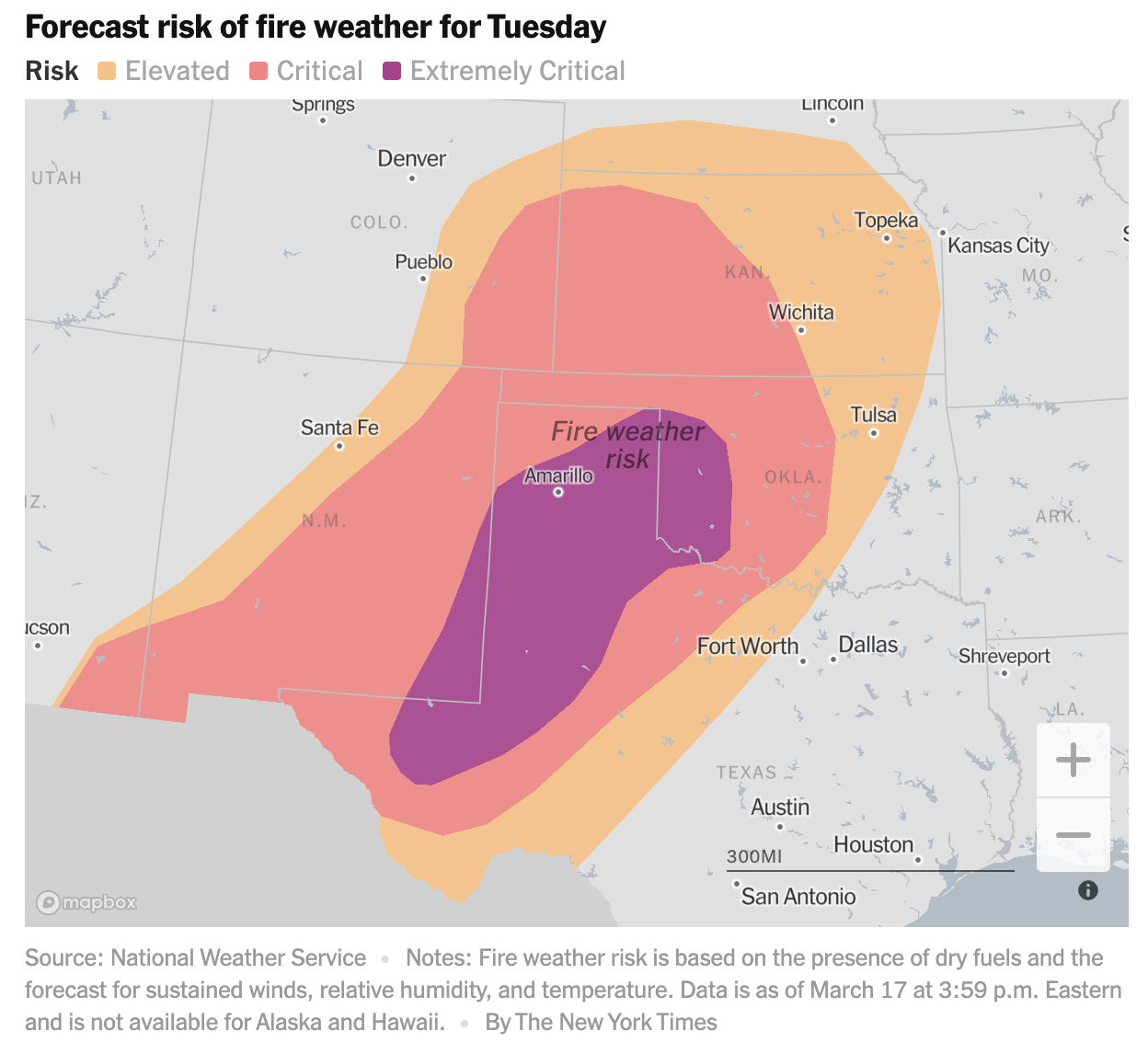
There’s fire weather in the Southern Plains region of TX and NM. Should we be worried about measles if people have to evacuate to shelters?
We were not happy to see that the map for “extremely critical” fire risk overlaps considerably with the map of measles cases in the Southern Plains, including West Texas and New Mexico. There have been fires in nearby Oklahoma, but so far there haven't been major wildfires in the areas of TX and NM hit hardest by measles. But if there are evacuations, measles could spread (just like wildfire) to unvaccinated or under-vaccinated people in temporary shelters. One of last year’s largest outbreaks was in a migrant shelter in Chicago, but that was quickly contained through cooperative community members and quick interventions from the CDC and state and local health departments, and ended at just 57 cases. In the Southern Plains regions, where vaccination rates are much lower than the recommended 95%, putting lots of people indoors together in a shelter could be the equivalent of a pile of dry brush for a wildfire. Measles is one of the most contagious diseases out there, and if there are unvaccinated people in a shelter with a contagious person, measles will spread quickly to those folks. If you’re in the Southern Plains region, getting yourself or your child vaccinated before any crises occur is the best way to protect your family. If you’re fully vaccinated with two doses of the MMR vaccinate, it’s still possible but very unlikely that you’ll get measles.
Best Read:
We liked this interesting read from the Post on a different kind of threat to our food supply than our usual foodborne illness…
How microplastics could be affecting our food supply - Washington Post