Hep A in L.A.📍: What Employers Should Know
Plus, May 5 was World Hand Hygiene Day 🧼
Measles News:
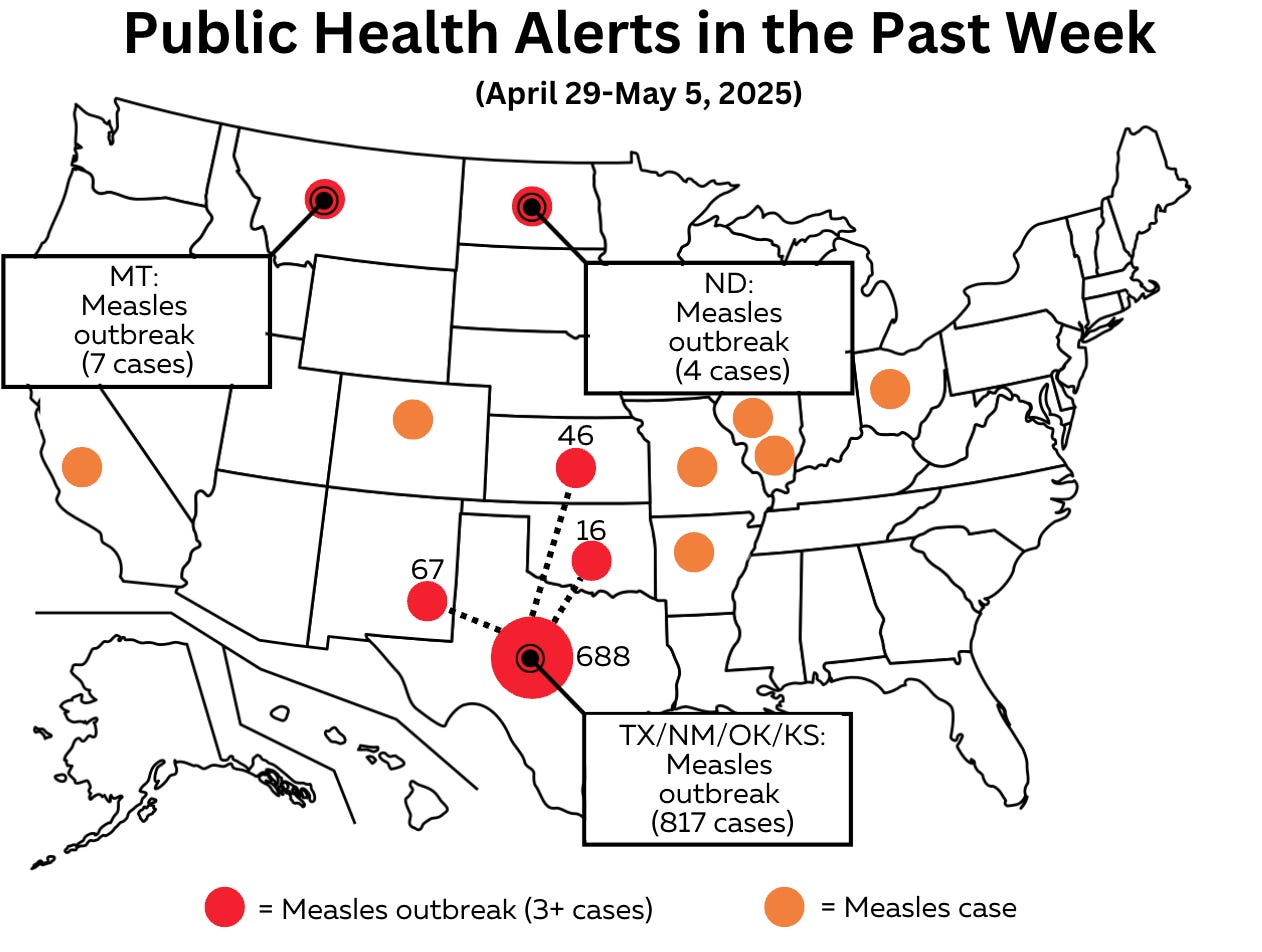
- Measles may be slowing down in West TX; it was the first week without a hospitalized kid, and weekly reported cases are dropping… (YLE)
- …that said, TX did just pass a big milestone: 700 cases so far this year. (TX DSHS)
- Officials warned of a potential measles exposure at the St. Louis Aquarium and a nearby restaurant that was not named. (St. Louis DOH)
- A small outbreak in Montana has 7 cases so far, and a new one in North Dakota has 4 cases. See this week's map below. (YLE)
Health News:
- LA County declared a Hepatitis A outbreak, with seven deaths linked to the ongoing outbreak over the past 13 months. (LA Times)
- Tomatoes sold in 11 states from H&C Farms were recalled due to possible Salmonella contamination. (FDA)
- CDC is investigating a multistate Salmonella Mbandaka outbreak linked to backyard poultry, with 7 people sick in 6 different states since February. (CDC)
- FDA’s top official in charge of drug and food safety inspections is leaving the FDA after 30+ years. (CBS)
- COVID, RSV, and flu are low, but it’s peak season for adenovirus, parainfluenza, and human metapneumovirus, so don’t be surprised if you get a cold. (Outbreak Outlook)
- May 5th was World Hand Hygiene Day, and the WHO issued a reminder that gloves do not replace hand hygiene, a warning aimed at healthcare workers but one that applies equally to food service. (WHO)
- Norovirus is finally showing some signs of decline, with test positivity down below 12% nationwide and decreasing over the past two months. (Outbreak Outlook)
- Getting the shingles vaccine lowers your risk of heart disease for 8 years. (CBS)
Best Questions:
What do we need to know about Hep A in Los Angeles?
Hepatitis A is spreading in Los Angeles, with higher case counts and elevated virus levels in wastewater testing. Last year there were 165 cases in the county, a whopping 3x the previous year. Most Hep A outbreaks are among people who recently traveled or are experiencing homelessness (because they have limited access to handwashing and toilets) – but of the 29 cases so far this year, most of them are in people who aren’t homeless, don’t use illicit drugs, and haven’t traveled recently. That indicates that it’s more of a widespread community outbreak, and “quick action is needed to protect public health,” according to county health officials. This is LA’s largest outbreak in the past decade, and the actual size of the outbreak is almost certainly larger than the number of confirmed cases. To make matters worse, wastewater data shows viral levels actually increasing right now.
So, what can employers do?
- Share good info about Hep A with employees. Hepatitis A is a liver disease caused by a virus. While it usually causes mild illness, it can be very serious for some people. It’s very contagious and spreads through close contact and contaminated food and drinks. Symptoms include diarrhea, vomiting, yellow skin or eyes, light (clay-colored) poop, and dark (cola-colored) urine.
- Make vaccination easy. There’s a Hep A vaccine that is safe and effective, and it’s the best way to prevent infection. But California doesn’t require the Hep A vaccine before kids can attend school or child care, so many adults may not be vaccinated. Even if you’re not sure if you’re already vaccinated, it’s safe to get another dose. Most insurances cover Hep A vaccine for free, and uninsured people may be able to get vaccinated at a local community health clinic. Reach out to ZHH if you’re interested in a Hep A vaccine clinic or vouchers for a local pharmacy.
- Focus on handwashing. If you’re following proper handwashing procedures, even an infectious person working with Hep A won’t spread the virus to others as long as they’re washing their hands properly when they go to the bathroom or before they prepare or serve food and drinks.
ZHH clients can check out our app for a Q&A for foodservice managers, as well. If you have other questions about protecting your LA-based team, don’t hesitate to reach out.
Sources: LA County, LA Times, CDC
Does hand sanitizer kill Hep A?
Not reliably. Most alcohol-based hand sanitizers are less effective against the Hepatitis A virus compared to soap and water. Hep A is a non-enveloped virus (like norovirus), which makes it harder for alcohol to break down. Many common hand sanitizers don’t contain enough alcohol to do the job—be sure to use one with at least 60% alcohol if soap and water aren't available.
That said, in a pinch—such as while traveling or in places without running water—using a high-alcohol hand sanitizer is better than nothing. But it’s not a replacement for thorough handwashing with soap and water, especially after using the bathroom or before preparing food.
Bottom line: In food service, nothing beats soap and water. Make sure your staff washes up the right way—every shift, every time.
Best Read:
There are a lot of fancy technologies out there to help your company serve food safely, but sometimes the best tools are old school. Handwashing really is the most effective method for preventing the spread of noro, Hep A, and a whole host of other bugs:
Washing hands goes long way to prevent contagious norovirus - AMA